Subscribe to Our Newsletter
By signing up for our email list you consent to the Save the Yellowstone Grizzly Privacy Policy. Unsubscribe from our emails at any time.

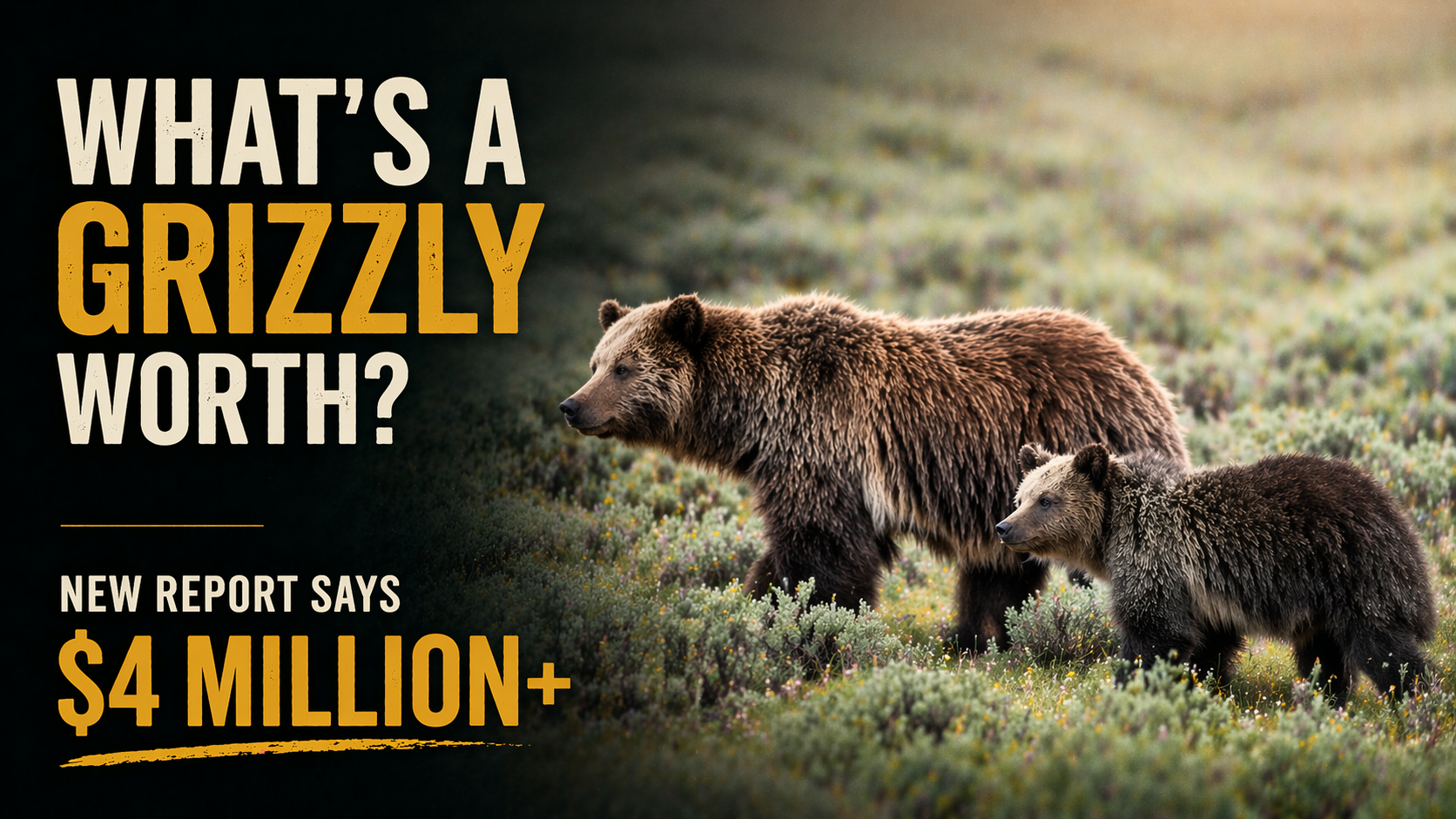
What is a grizzly bear worth?
According to new research on wildlife and highways in Montana, the answer is:
Over $4 million per bear.
That number isn’t symbolic it reflects the real economic value people place on the existence of grizzly bears, along with the costs associated with their loss.
And it changes the conversation entirely.
A Different Way to Think About Conservation
For years, debates about grizzly bears have been framed around emotion, conflict, or politics.
But this new report—Potential Future Mitigation Measures for Wildlife and People Along I-90 and Other Major Highways in Western Montana—shows something much simpler:
Protecting grizzlies isn’t just the right thing to do. It’s the economically rational thing to do.
The study was led by transportation ecologist and author Marcel Huijser, whose work has helped define how wildlife crossings reduce collisions and restore connectivity across North America. Huijser is also featured in our documentary Return of the Grizzly, where he speaks to the urgent need to reconnect fragmented landscapes.
Why Grizzlies Carry So Much Value
Unlike deer or elk, the economic value of a grizzly bear is driven largely by what economists call “existence value”:
• The value people place on simply knowing grizzlies still exist
• The importance of preserving them for future generations
• Their role as a symbol of wild, functioning ecosystems
In the report:
• A deer collision is valued at about $19,000
• A grizzly bear collision is valued at over $4.2 million
That means that even a single grizzly bear lost represents an enormous economic and ecological cost.
Grizzlies Power the Western Economy
Grizzly bears are more than a symbol of wildness—they are a driver of local economies across the West.
Millions of people travel each year to places like:
• Yellowstone National Park
• Glacier National Park
• Grand Teton National Park
Hoping for a glimpse of a grizzly bear.
Wildlife tourism generates billions of dollars annually in gateway communities across Montana and Wyoming supporting local businesses, jobs, and rural economies.
From lodging and restaurants to guides and outfitters, entire communities depend on the presence of intact wildlife and functioning ecosystems.
A landscape without grizzlies is not just an ecological loss.
It’s an economic one.
The Real Risk Isn’t Just Collisions
Grizzlies aren’t dying in large numbers on highways.
But highways are still one of the greatest barriers to their recovery.
Why?
Because roads prevent movement.
• They block access to habitat
• They isolate populations
• They limit genetic diversity
The report found that:
• 124 miles of I-90 are critical for grizzly connectivity
• But most of those areas are not collision hotspots
Which means:
If we wait until animals are being hit, we’ve already waited too long.
Mission Creek: A Smart Investment
One of the clearest opportunities to act is Mission Creek, east of Livingston along I-90.
This stretch of highway sits in a landscape that grizzlies are beginning to move through as they expand beyond Yellowstone. It is part of a natural pathway that could help reconnect isolated populations across the Northern Rockies.
Right now, it functions as a barrier.
But it doesn’t have to.
Building a wildlife crossing here is not just about conservation, it’s about protecting a multi-million-dollar asset.
It reduces collision risk
It supports population recovery
It preserves long-term ecological and economic value
The science tells us what works.
The economy tells us what’s at stake.
The rest is a choice.
“It is a choice that you have to make… do we want it?” — Marcel Huijser, author and transportation ecologist
Featured in Return of the Grizzly
The Return on Investment
Wildlife crossings paired with fencing are proven to:
• Reduce collisions by 80–100%
• Provide safe passage across highways
• Restore connectivity at a landscape scale
When you factor in the value of species like grizzly bears, these projects often pay for themselves over time.
The real question isn’t whether we can afford to build them.
It’s whether we can afford not to.
A Moment of Choice
Grizzlies are moving.
They are attempting to reconnect landscapes that have been divided for generations.
But without safe passage across highways like I-90, that recovery will stall.
We are faced with a simple decision:
• Invest in connectivity
• Or accept long-term loss
Download the Full Report
To explore the full economic analysis, maps, and recommendations:
Download: Wildlife and Highways in Western Montana (2026 Report, PDF)